Bally’sSports Betting Terminal
2022
Retail Hardware
Integrated Web App
Prototype
Sports Product Studio - Vancouver / Manchester
As the UX Designer and Prototype Lead on this project, my challenge was to translate the digital Bally’s experience into a physical centerpiece on the casino floor. This wasn’t just about putting a website on a kiosk; it was a comprehensive hardware-software R&D project.
Leading the UX direction in collaboration with our Vancouver team and hardware vendor, Suzohapp, I architected a terminal that balanced player excitement with rigorous operational requirements. By building high-fidelity prototypes for both the executive and engineering teams, I was able to secure high-level buy-in, conduct early testing with lowered cost and ensure a coherent experience for both players and casino staff.
Amplify Fan Engagment
The Sports Betting Terminal was another critical piece in Bally’s aggressive "Ballyverse" strategy—a vision to create a true omni-channel ecosystem where the boundary between digital apps and physical casino floors disappears. The goal was to provide a seamless, unified journey where a player’s rewards, wallet, and betting experience remain consistent whether they are at home or standing in a resort.
01
Hardware UX:
Designing for the Physical Environment
In the "Ballyverse," the user isn't just a persona; they are a person standing in a noisy, high-traffic casino, likely with a drink in one hand and a betting slip in the other.
Ergonomics & Human Factors:
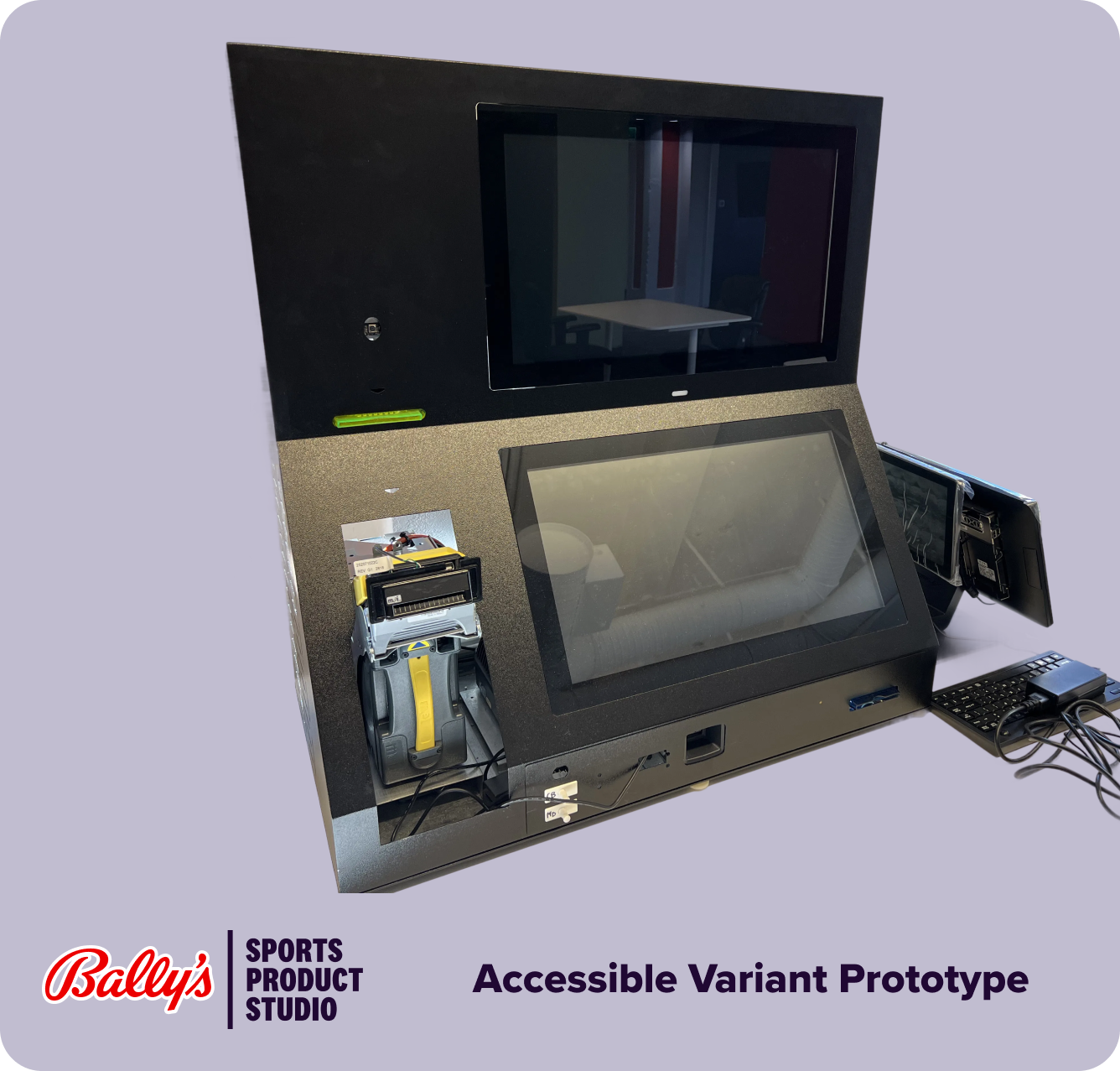
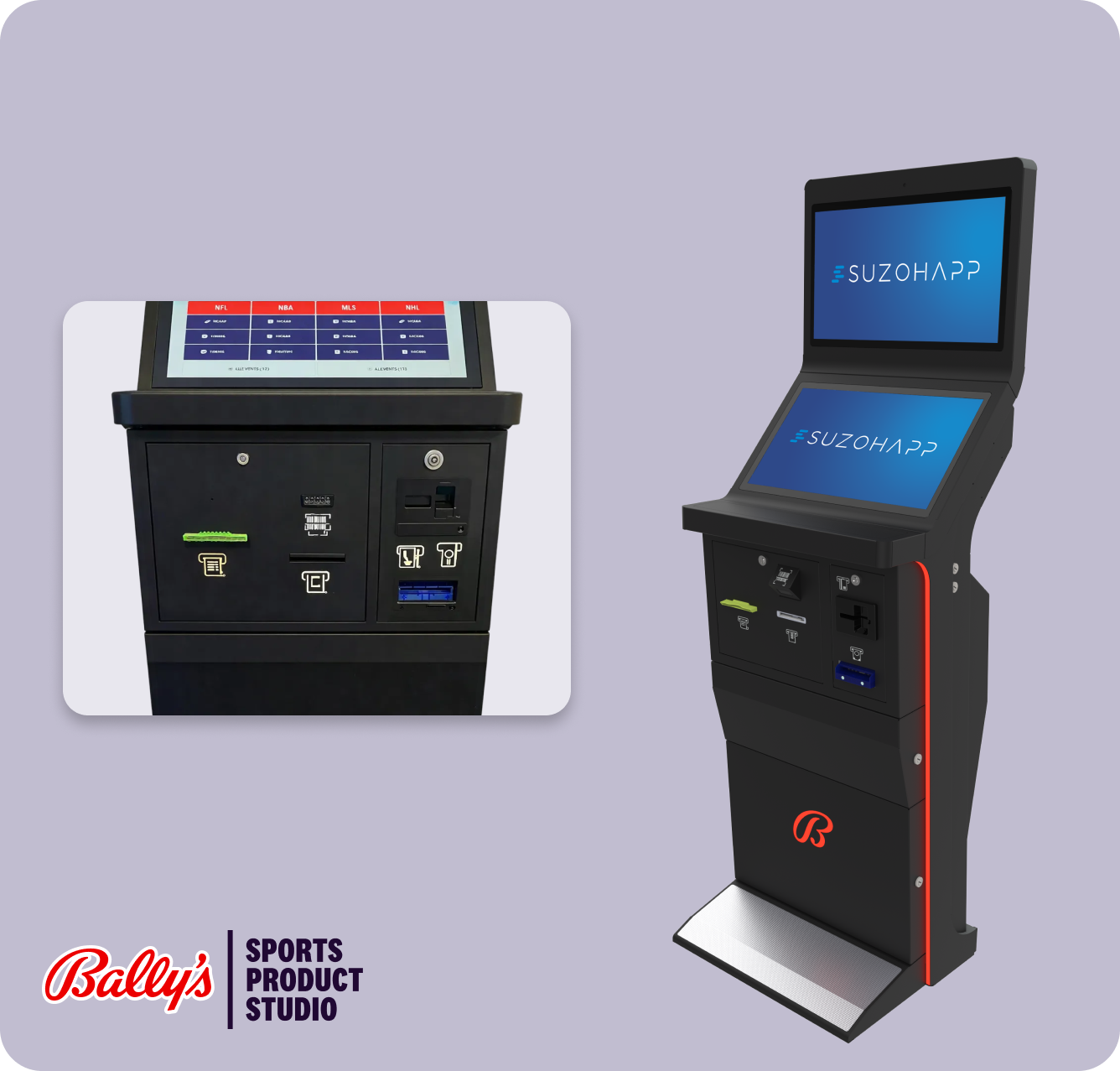
Working with Product Manager and Suzohapp, we drafted product requirment ensuring crucial interaction points (scanners, bill acceptors, and card readers) were optimized for reach and visibility.
Accessibility and ADA Compliance
Crypto carries inherent perceived risk. To build trust, I redesigned the AML/KYC onboarding flow to be frictionless yet transparent, signaling to users that their assets were protected by bank-grade security protocols.
02
Operational Excellence:
Designing for ROI
The terminal is a business asset; we also recognized the need to design for the "silent user"—the casino staff.
In a typical casino, staff handles the heavy lifting of daily operations. Through interviews and qualitative research, we learned that, a Bally’s staff member requires 80 hours of training to operate a sportsbook terminal. They manage issues, empty cashboxes, and reload printers multiple times a day—all while following strict security protocols. To help Bally’s deliver an exceptional guest experience across the country, we reimagined the maintenance functions to drastically reduce this training burden.
To help Bally’s consistently deliver exceptional guest experience across all of its resorts, we reimagined the maintenance functions and redesigned how staff operate these machines.
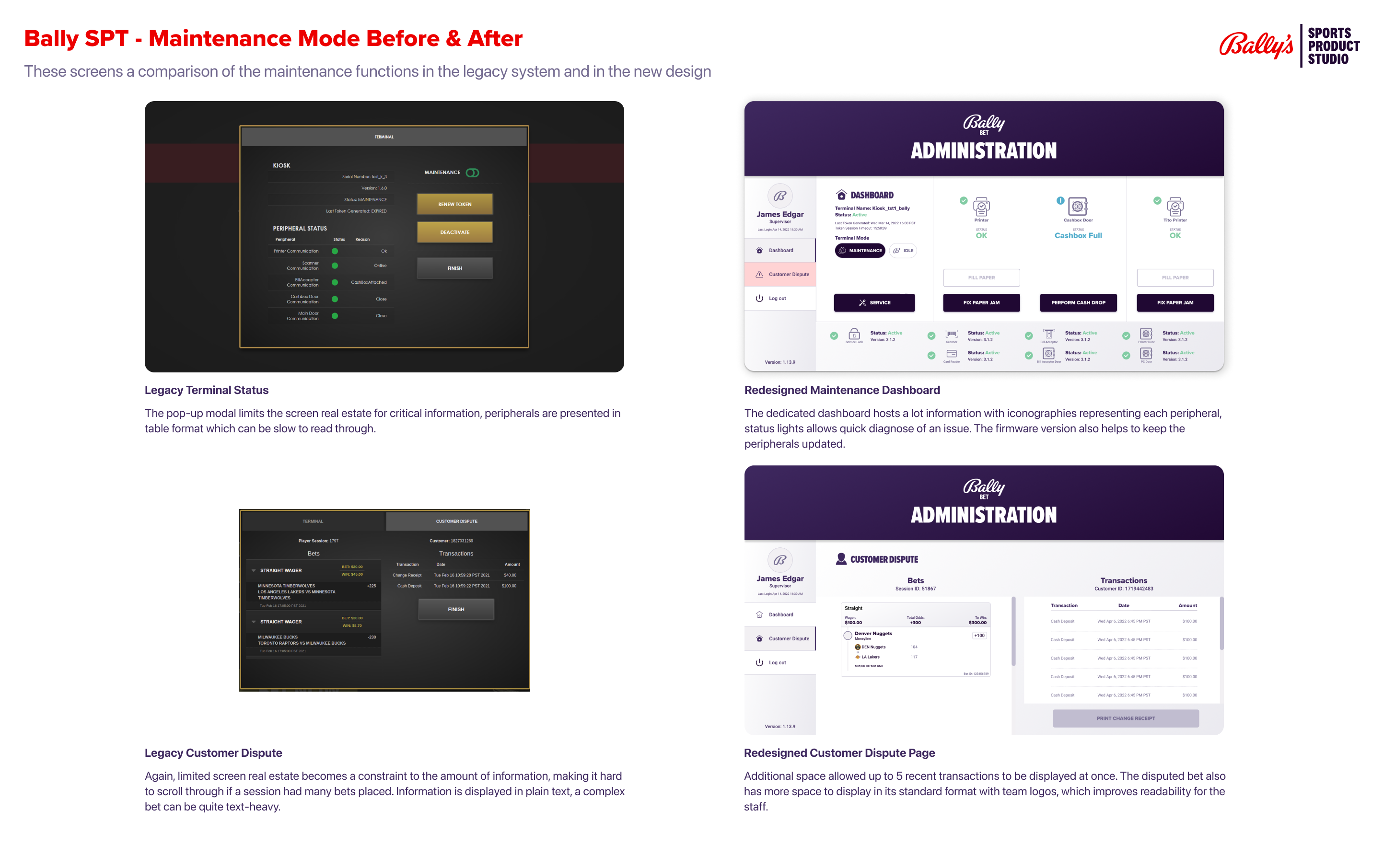
“Status-at-a-Glance” Maintenance Dashboard
The newly redesigned dashboard allow staff to complete 90% of their daily tasks, almost all of the common issues can be identified quickly while adhering to strict Security SOPs.
Proactive Troubleshooting
Most common issues can now be identified instantly while adhering to strict Security SOPs.
Clarity & Efficiency
By creating an intuitive dashboard for peripheral status (printer paper levels, cashbox capacity, and TITO jams), we provided the staff with the clarity needed for day-to-day efficiency.
This directly reduced terminal downtime and maximized operational ROI across the 19-property portfolio.
03
BallyverseSportsbook Customer Experience
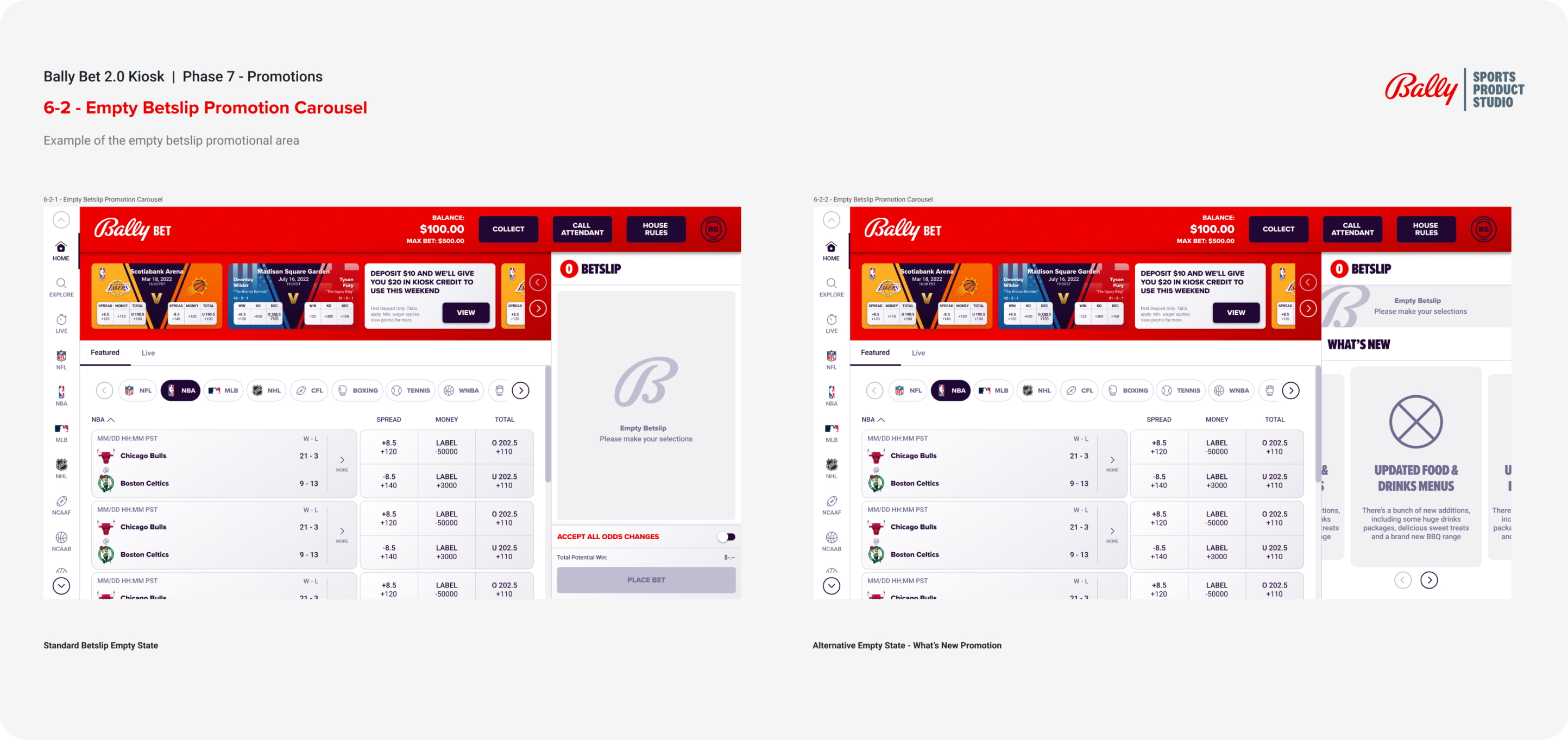
The core Sportsbook Terminal (SPT) UI was designed to echo Bally's digital mobile products, ensuring a coherent "Ballyverse" brand identity.
Dynamic Welcome Screen
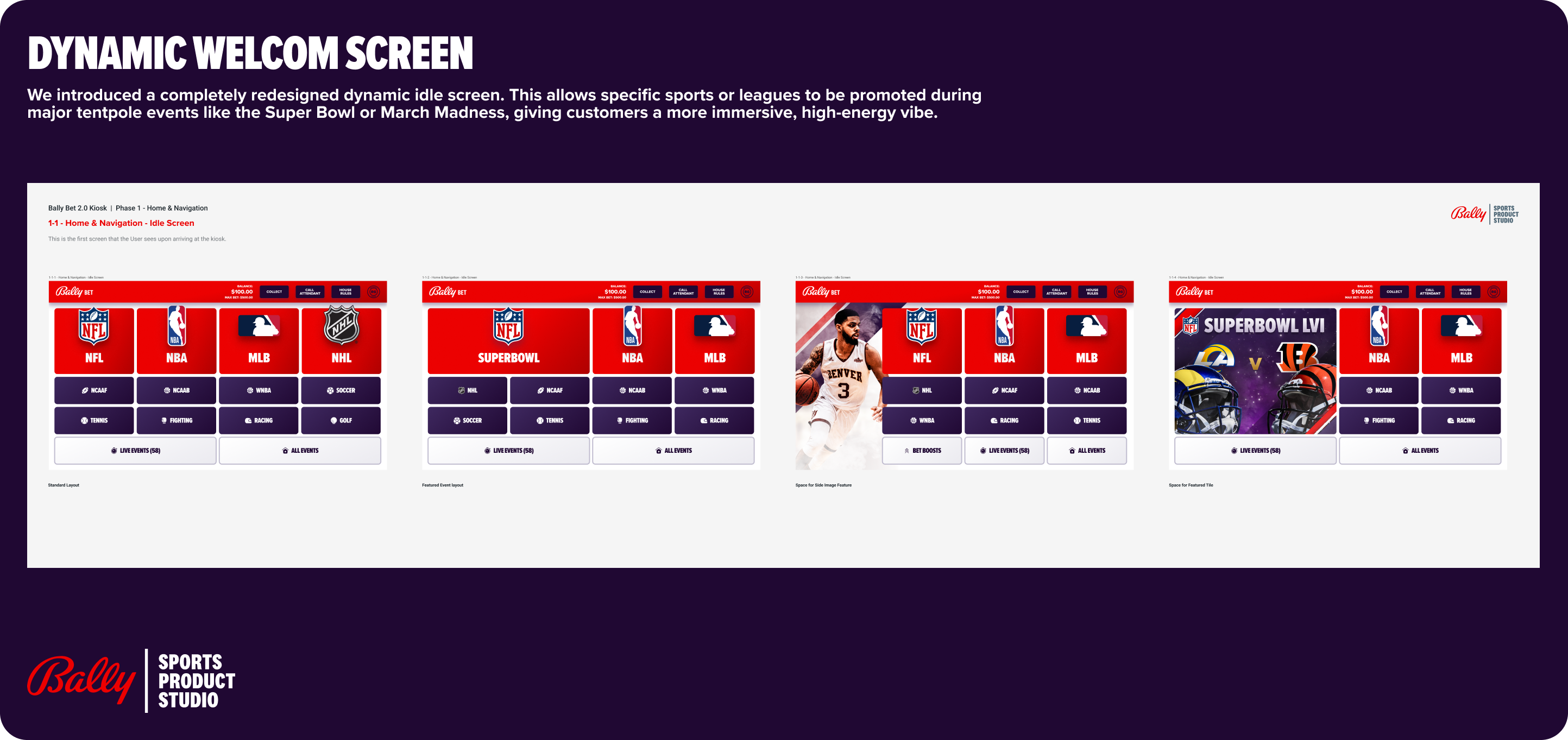
We introduced a completely redesigned dynamic idle screen. This allows specific sports or leagues to be promoted during major tentpole events like the Super Bowl or March Madness, giving customers a more immersive, high-energy vibe.
Enhanced Sensory Feedback
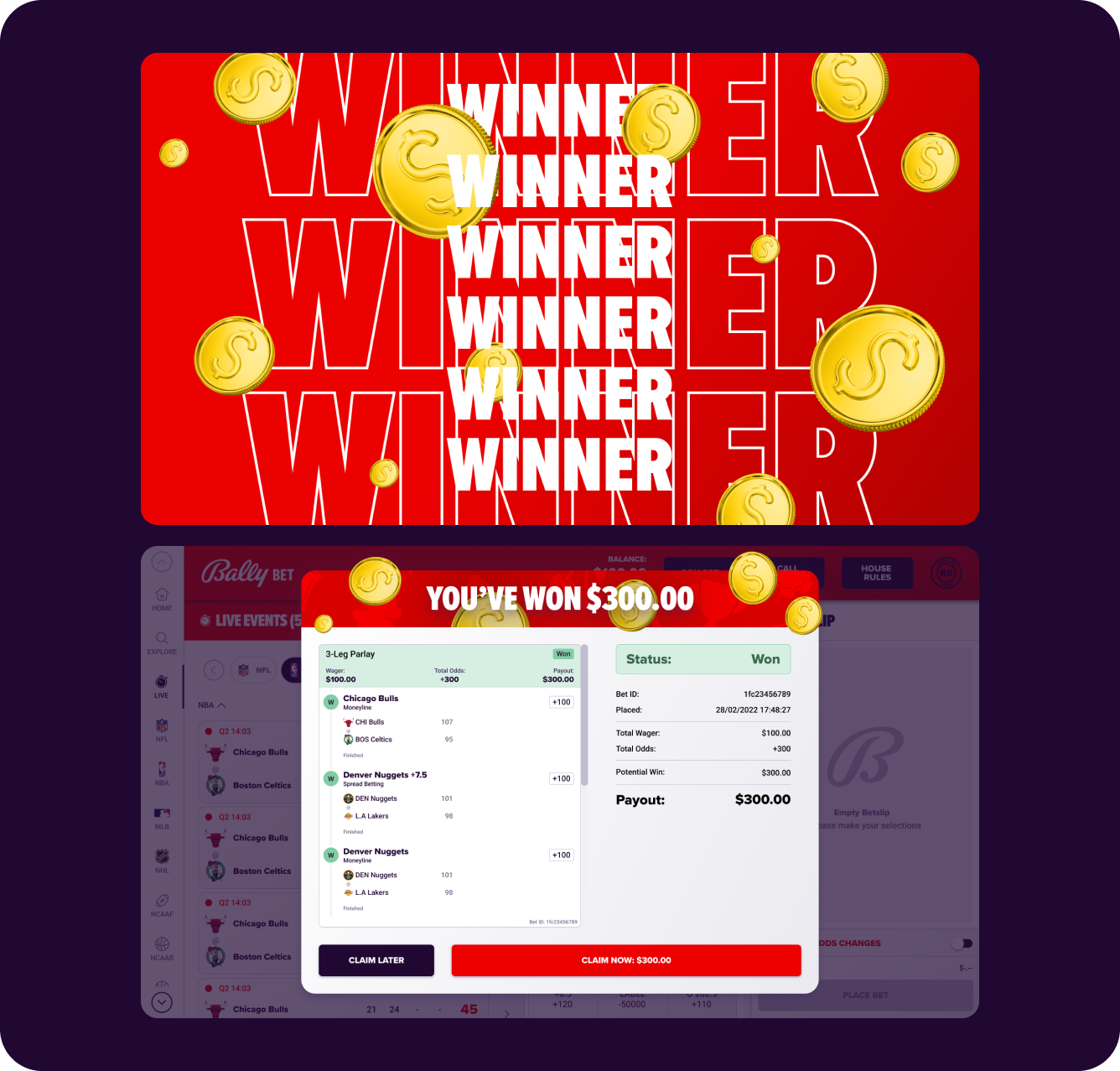
To build better communication with customers, I introduced custom animations for key interactions:
- Ticket Printing & Scanning: Visual cues that confirm hardware actions.
- Winning Results: Celebratory animations that amplify the excitement of a win.
These digital flourishes ensure that the transition from a mobile app to a casino terminal feels like a natural extension of the same ecosystem.
04
The "Prototype Advocate":
De-Risking the Development Loop
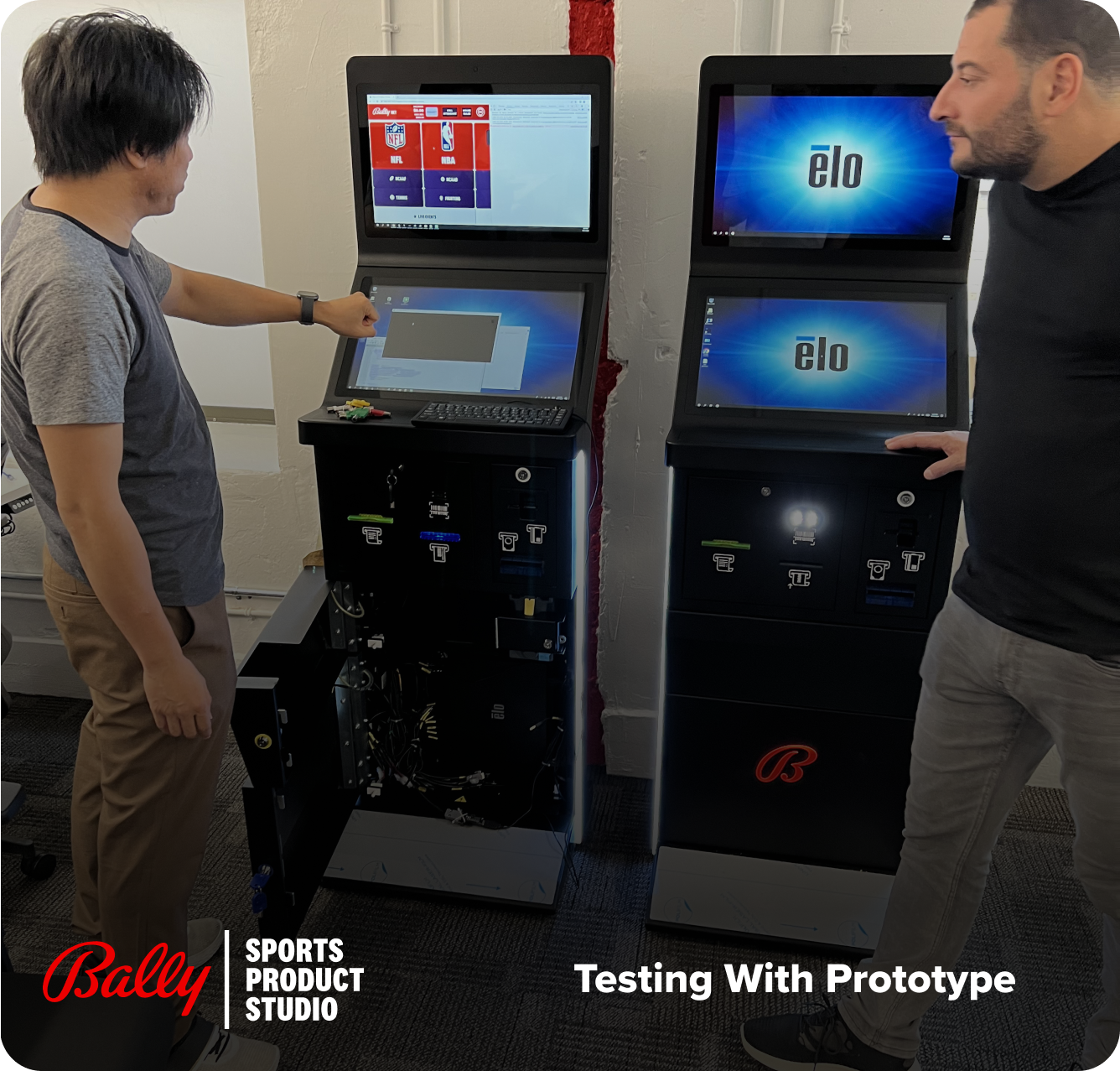
I am a loud advocate for High-Fidelity Prototyping as a tool for communication and risk mitigation. I utilized Figma and ProtoPie to create a fully interactive "Living Demo" before a single line of code was written.
Executive Storytelling
I used these high-fidelity prototypes to demo the "Player Experience" to executives. This allowed stakeholders to experience the product realistically, which lowered the initial cost to get buy-ins and provided a concrete vision for the final product.
Interactive Product Requirment Document
By simulating complex hardware interactions—such as physical scanner feedback and ticket-out animations—I provided our development team with a functional spec that eliminated ambiguity and reduced costly rework during the build phase.
Testing & Validation Platform
This high-fidelity approach allowed us to test the tactile timing between digital actions and physical hardware responses, ensuring the brand promise was felt in the physical world.


05
Bally Rewards
Loyalty and Personalization
The "Bally Moments" framework became a cornerstone of the “Ballyverse” strategy, bridging the gap between the sports broadcast and the betting wallet. It shifted the app from a utility to an entertainment destination, echoing the “Born to Entertain” motto of the Bally’s Corporation.
The project taught me to navigate live-data latency and the regulatory challenges of the North American betting market. It was about creating a new way to consume sports. I feel incredibly fortunate to help design a framework for interactive consumption that streaming providers are now eager to adopt.
Industry Context:
The Race for Interactive Viewing
“The games have proven to be a hit among hockey fans, with over 285,000 users signing up to play at least one of the regular free-to-play games and over a million fans entering the NHL bracket challenge each playoff season.”
While the games are purely focused for audiences in the United States and Canada, the All-Star voting system was utilised across the globe, with users from 141 countries registering votes.
Check out the latest NHL Stanley Cup Bracket Challenge.

Other Projects
See Project
→
See Project
→
See Project
→



Bally’sSports Betting Terminal
2022
Retail Hardware
Integrated Web App
Prototype
Sports Product Studio - Vancouver / Manchester
As the UX Designer and Prototype Lead on this project, my challenge was to translate the digital Bally’s experience into a physical centerpiece on the casino floor. This wasn’t just about putting a website on a kiosk; it was a comprehensive hardware-software R&D project.
Leading the UX direction in collaboration with our Vancouver team and hardware vendor, Suzohapp, I architected a terminal that balanced player excitement with rigorous operational requirements. By building high-fidelity prototypes for both the executive and engineering teams, I was able to secure high-level buy-in, conduct early testing with lowered cost and ensure a coherent experience for both players and casino staff.
Amplify Fan Engagment
The Sports Betting Terminal was another critical piece in Bally’s aggressive "Ballyverse" strategy—a vision to create a true omni-channel ecosystem where the boundary between digital apps and physical casino floors disappears. The goal was to provide a seamless, unified journey where a player’s rewards, wallet, and betting experience remain consistent whether they are at home or standing in a resort.
01
Hardware UX:
Designing for the Physical Environment
In the "Ballyverse," the user isn't just a persona; they are a person standing in a noisy, high-traffic casino, likely with a drink in one hand and a betting slip in the other.
Ergonomics & Human Factors:
Working with Product Manager and Suzohapp, we drafted product requirment ensuring crucial interaction points (scanners, bill acceptors, and card readers) were optimized for reach and visibility.
Accessibility and ADA Compliance
Crypto carries inherent perceived risk. To build trust, I redesigned the AML/KYC onboarding flow to be frictionless yet transparent, signaling to users that their assets were protected by bank-grade security protocols.
02
Operational Excellence:
Designing for ROI
The terminal is a business asset; we also recognized the need to design for the "silent user"—the casino staff.
In a typical casino, staff handles the heavy lifting of daily operations. Through interviews and qualitative research, we learned that, a Bally’s staff member requires 80 hours of training to operate a sportsbook terminal. They manage issues, empty cashboxes, and reload printers multiple times a day—all while following strict security protocols. To help Bally’s deliver an exceptional guest experience across the country, we reimagined the maintenance functions to drastically reduce this training burden.
To help Bally’s consistently deliver exceptional guest experience across all of its resorts, we reimagined the maintenance functions and redesigned how staff operate these machines.
“Status-at-a-Glance” Maintenance Dashboard
The newly redesigned dashboard allow staff to complete 90% of their daily tasks, almost all of the common issues can be identified quickly while adhering to strict Security SOPs.
Proactive Troubleshooting
Most common issues can now be identified instantly while adhering to strict Security SOPs.
Clarity & Efficiency
By creating an intuitive dashboard for peripheral status (printer paper levels, cashbox capacity, and TITO jams), we provided the staff with the clarity needed for day-to-day efficiency.
This directly reduced terminal downtime and maximized operational ROI across the 19-property portfolio.
03
BallyverseSportsbook Customer Experience
The core Sportsbook Terminal (SPT) UI was designed to echo Bally's digital mobile products, ensuring a coherent "Ballyverse" brand identity.
Dynamic Welcome Screen
We introduced a completely redesigned dynamic idle screen. This allows specific sports or leagues to be promoted during major tentpole events like the Super Bowl or March Madness, giving customers a more immersive, high-energy vibe.
Enhanced Sensory Feedback
To build better communication with customers, I introduced custom animations for key interactions:
- Ticket Printing & Scanning: Visual cues that confirm hardware actions.
- Winning Results: Celebratory animations that amplify the excitement of a win.
These digital flourishes ensure that the transition from a mobile app to a casino terminal feels like a natural extension of the same ecosystem.
05
Bally Rewards
Loyalty and Personalization
The "Bally Moments" framework became a cornerstone of the “Ballyverse” strategy, bridging the gap between the sports broadcast and the betting wallet. It shifted the app from a utility to an entertainment destination, echoing the “Born to Entertain” motto of the Bally’s Corporation.
The project taught me to navigate live-data latency and the regulatory challenges of the North American betting market. It was about creating a new way to consume sports. I feel incredibly fortunate to help design a framework for interactive consumption that streaming providers are now eager to adopt.
Industry Context:
The Race for Interactive Viewing
“The games have proven to be a hit among hockey fans, with over 285,000 users signing up to play at least one of the regular free-to-play games and over a million fans entering the NHL bracket challenge each playoff season.”
While the games are purely focused for audiences in the United States and Canada, the All-Star voting system was utilised across the globe, with users from 141 countries registering votes.
Check out the latest NHL Stanley Cup Bracket Challenge.
04
The "Prototype Advocate":
De-Risking the Development Loop
I am a loud advocate for High-Fidelity Prototyping as a tool for communication and risk mitigation. I utilized Figma and ProtoPie to create a fully interactive "Living Demo" before a single line of code was written.
Executive Storytelling
I used these high-fidelity prototypes to demo the "Player Experience" to executives. This allowed stakeholders to experience the product realistically, which lowered the initial cost to get buy-ins and provided a concrete vision for the final product.
Interactive Product Requirment Document
By simulating complex hardware interactions—such as physical scanner feedback and ticket-out animations—I provided our development team with a functional spec that eliminated ambiguity and reduced costly rework during the build phase.
Testing & Validation Platform
This high-fidelity approach allowed us to test the tactile timing between digital actions and physical hardware responses, ensuring the brand promise was felt in the physical world.


Other Projects
See Project
→
See Project
→
See Project
→


Bally’sSports Betting Terminal
2022
Retail Hardware
Integrated Web App
Prototype
Sports Product Studio - Vancouver / Manchester
As the UX Designer and Prototype Lead on this project, my challenge was to translate the digital Bally’s experience into a physical centerpiece on the casino floor. This wasn’t just about putting a website on a kiosk; it was a comprehensive hardware-software R&D project.
Leading the UX direction in collaboration with our Vancouver team and hardware vendor, Suzohapp, I architected a terminal that balanced player excitement with rigorous operational requirements. By building high-fidelity prototypes for both the executive and engineering teams, I was able to secure high-level buy-in, conduct early testing with lowered cost and ensure a coherent experience for both players and casino staff.
The "Ballyverse" Vision
The Sports Betting Terminal was another critical piece in Bally’s aggressive "Ballyverse" strategy—a vision to create a true omni-channel ecosystem where the boundary between digital apps and physical casino floors disappears. The goal was to provide a seamless, unified journey where a player’s rewards, wallet, and betting experience remain consistent whether they are at home or standing in a resort.
01
Hardware UX:
Designing for the Physical Environment
In the "Ballyverse," the user isn't just a persona; they are a person standing in a noisy, high-traffic casino, likely with a drink in one hand and a betting slip in the other.
Ergonomics & Human Factors:
Partnering with Product Manager and our hardware vendor, Suzohapp, the team outlined in the Product Requirement Documents (PRDs) to enhance the terminal's ergonomics. We optimized the placement of scanners, bill acceptors, and card readers to ensure every interaction point was positioned for maximum visibility and ease of reach, catering to a wide range of player heights and physical abilities.
To add a cherry on top, a handy ledge was added to the bottom of the lower touchscreen to place drinks or personal items while players interact with the terminal.
We also redesigned the internal peripheral layout by integrating direct feedback from casino operations teams. By benchmarking against legacy hardware, we improved a setup that significantly streamlined maintenance workflows. This optimization not only reduced the training load for staff but also drove measurable gains in operational efficiency and terminal uptime across the resort properties.
Accessibility and ADA Compliance
The team led initiative to align the terminal with ADA standards and WCAG 2.1 guidelines. With the hardware vendor revising their physical layout, ensuring the terminal was inclusive for players with limited reach or mobility.
02
Operational Excellence:
Designing for ROI
The terminal is a business asset; we also recognized the need to design for the "silent user"—the casino staff.
In a typical casino, staff handles the heavy lifting of daily operations. Through interviews and qualitative research, we learned that, a Bally’s staff member requires 80 hours of training to operate a sportsbook terminal. They manage issues, empty cashboxes, and reload printers multiple times a day—all while following strict security protocols. To help Bally’s deliver an exceptional guest experience across the country, we reimagined the maintenance functions to drastically reduce this training burden.
To help Bally’s consistently deliver exceptional guest experience across all of its resorts, we reimagined the maintenance functions and redesigned how staff operate these machines.
“Status-at-a-Glance” Maintenance Dashboard
The newly redesigned dashboard allow staff to complete 90% of their daily tasks, almost all of the common issues can be identified quickly while adhering to strict Security SOPs.
Proactive Troubleshooting
Most common issues can now be identified instantly while adhering to strict Security SOPs.
Clarity & Efficiency
By creating an intuitive dashboard for peripheral status (printer paper levels, cashbox capacity, and TITO jams), we provided the staff with the clarity needed for day-to-day efficiency.
This directly reduced terminal downtime and maximized operational ROI across the 19-property portfolio.
03
BallyverseSportsbook Customer Experience
The core Sportsbook Terminal (SPT) UI was designed to echo Bally's digital mobile products, ensuring a coherent "Ballyverse" brand identity.
Dynamic Welcome Screen
We introduced a completely redesigned dynamic idle screen. This allows specific sports or leagues to be promoted during major tentpole events like the Super Bowl or March Madness, giving customers a more immersive, high-energy vibe.
Enhanced Sensory Feedback
To build better communication with customers, I introduced custom animations for key interactions:
- Ticket Printing & Scanning: Visual cues that confirm hardware actions.
- Winning Results: Celebratory animations that amplify the excitement of a win.
These digital flourishes ensure that the transition from a mobile app to a casino terminal feels like a natural extension of the same ecosystem.
04
The "Prototype Advocate":
De-Risking the Development Loop
I am a loud advocate for High-Fidelity Prototyping as a tool for communication and risk mitigation. I utilized Figma and ProtoPie to create a fully interactive "Living Demo" before a single line of code was written.
Executive Storytelling
I used these high-fidelity prototypes to demo the "Player Experience" to executives. This allowed stakeholders to experience the product realistically, which lowered the initial cost to get buy-ins and provided a concrete vision for the final product.
Interactive Product Requirement Document
By simulating complex hardware interactions—such as physical scanner feedback and ticket-out animations—I provided our development team with a functional spec that eliminated ambiguity and reduced costly rework during the build phase.
Testing & Validation Platform
This high-fidelity approach allowed us to test the tactile timing between digital actions and physical hardware responses, ensuring the brand promise was felt in the physical world.


05
Bally Rewards
Loyalty and Personalization
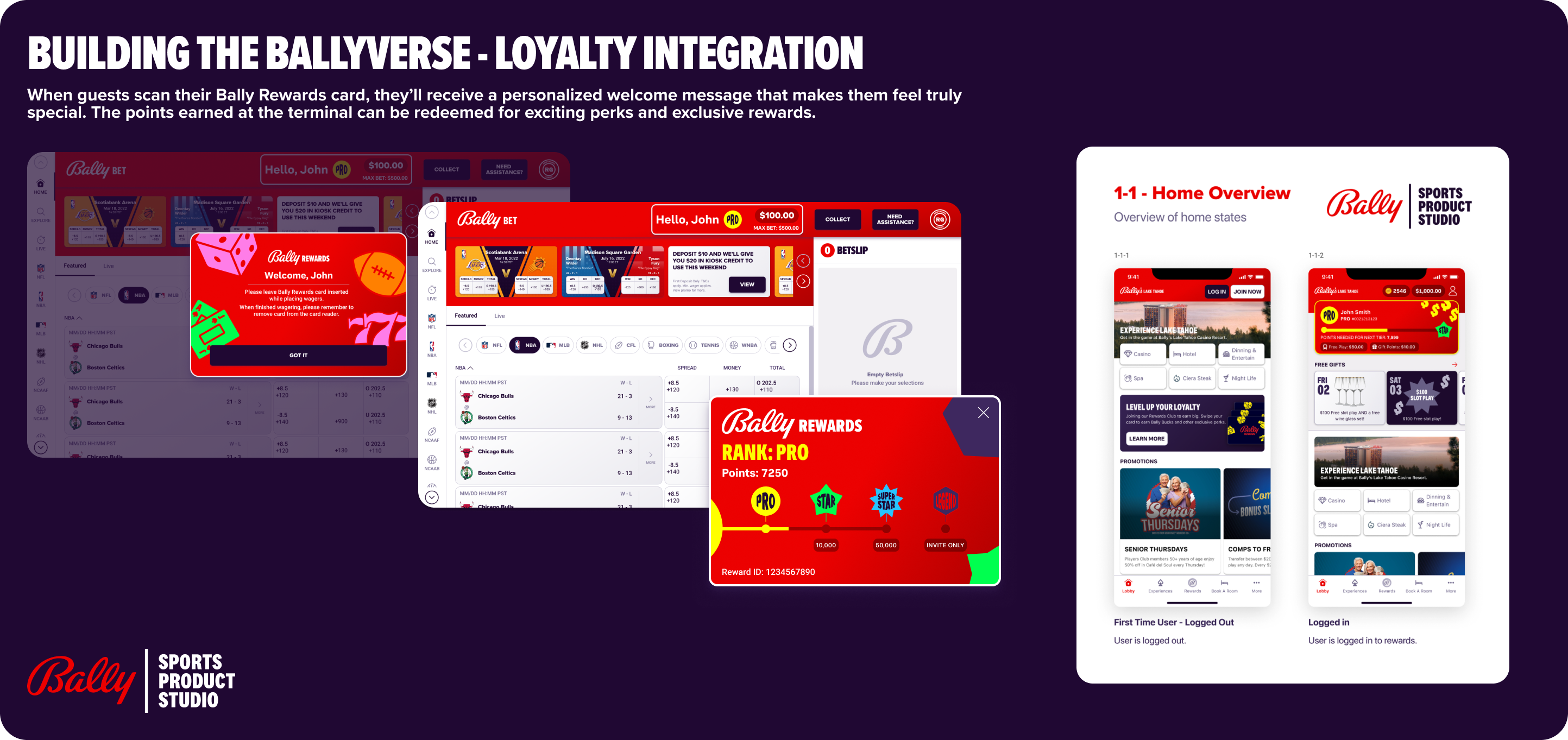
A key differentiator for the SBT experience was the deep integration of Bally Rewards, Bally’s loyalty program. By bringing personalization into the physical terminal, we transformed a transactional kiosk into a personalized concierge.
Industry Context:
The Race for Interactive Viewing
This project represents a shift from designing "screens" to designing complex systems. By extending UX principles beyond software and into hardware R&D, our team was able to transform the customer and operational experience across the entire Bally's resort portfolio.
My contribution as the UX Designer and Prototype Lead centered on three pillars: Unified design system to bridge the digital-physical divide; leveraging prototypes to secure executive buy-in and enhance internal communication; advocating for the “silent user” to drive operational ROI.
Ultimately, we delivered more than just a betting machine; we built a coherent, inclusive, and personalized centerpiece for the modern casino floor, reinforcing Bally’s position as an omni-channel leader in the gaming industry.

Other Projects
See Project
→
See Project
→
See Project
→

